Villa San Marco: one of the largest Villas of Stabia
Villa San Marco is one of the most impressive and significant of the Villas of Stabia. Situated on the Varano plateau, overlooking the Bay of Naples, it is one of the most complete examples of a Roman villa devoted to otium, designed as a residence and a place of leisure for the elite.
In terms of size and architectural complexity, Villa San Marco is among the largest villas in the area around Vesuvio, offering extraordinary insights into Roman private life.
The history of the villa
The construction of Villa San Marco probably dates to the late Republican period, with subsequent alterations during the Imperial era. Over time, the villa was extended and reorganised to meet the needs of its owners.
Like the other villas of Stabiae, Villa San Marco was struck by the eruption of Vesuvio in AD 79, which led to its abandonment and preserved it until its rediscovery in modern times.
A complex architectural layout
Villa San Marco stands out for its spatial arrangement. Rather than a single building, it is a series of rooms arranged around courtyards and colonnades.
Its main features include:
- ◆ Spacious peristyles
- ◆ Reception rooms
- ◆ Private spaces
- ◆ Service areas
This complexity reflects the villa's role as a home, a place to welcome guests and a setting for displaying social status.
The main rooms
The villa contains numerous rooms, each with a specific function:
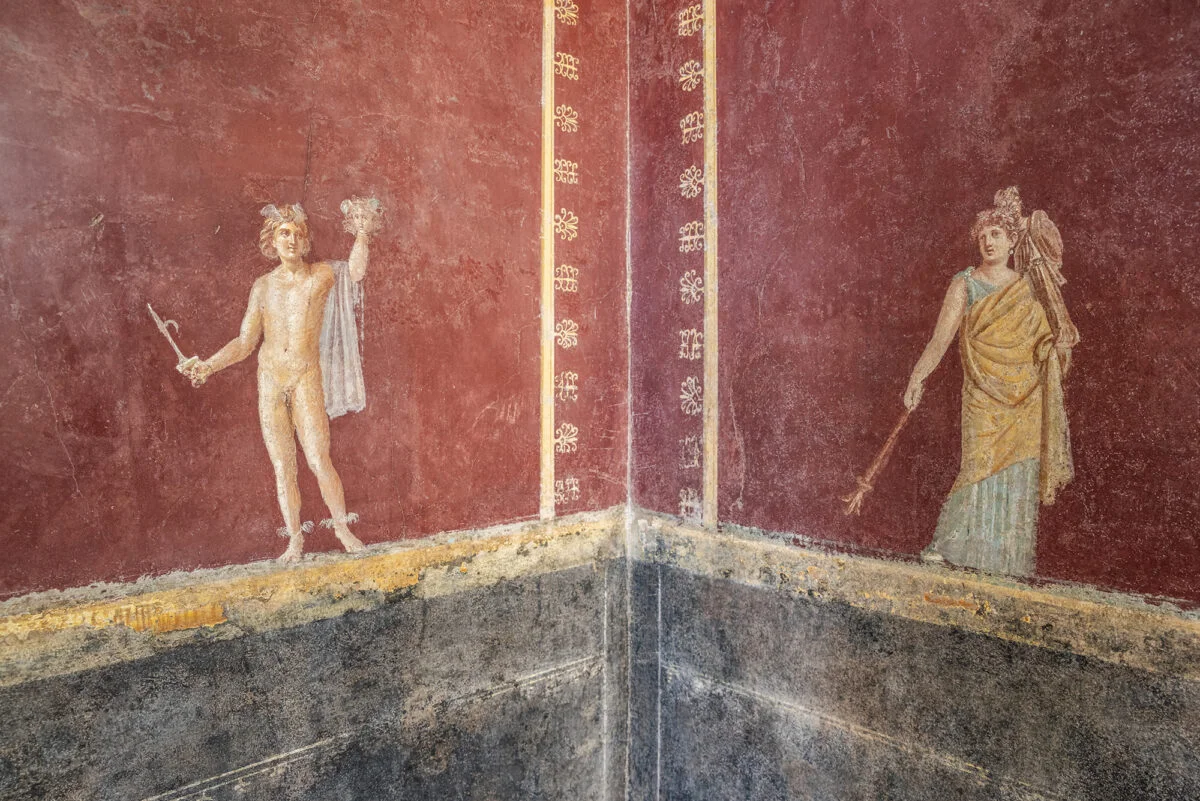
- ◆ Rooms decorated with frescoes
- ◆ Rooms for rest and relaxation
- ◆ Open spaces and gardens
- ◆ Colonnades used in everyday life
The layout shows a clear distinction between public and private areas, typical of Roman aristocratic residences.
The private baths
One of the most interesting features of Villa San Marco is its own bath complex. Private baths were a hallmark of prestigious residences and demonstrate the level of comfort achieved.
These facilities allowed the owners to enjoy amenities similar to those of the large public baths, but in a private setting.
The relationship with the landscape
Like all the Villas of Stabia, Villa San Marco was designed in close relation to the surrounding landscape. Its position on the Varano plateau afforded exceptional views of the sea and the gulf.
This was no minor consideration: the view was an integral part of living in the villa and helped define its value.
Villa San Marco within the network of Villas of Stabia
Villa San Marco is one of the main complexes in the network of Villas of Stabia, alongside Villa Arianna and other settlements spread along the plateau.
This network represents a unique model in the Roman world, distinct from the urban setting of Pompei and more focused on private life and a relationship with nature. To explore the context further, visit the page dedicated to The Villas of Stabia.
Archaeological rediscovery
The first investigations of the villa date to the 18th century, but it was in the 20th century that Villa San Marco underwent more systematic excavation. Archaeologists uncovered structures, decorations and rooms that now offer a detailed picture of Roman life.
Why visit Villa San Marco
A visit to Villa San Marco takes you into a vast and varied space that offers an insight into the private side of Roman life. Compared with other, more crowded sites, the villa allows for a quieter visit, giving you time to appreciate its spaces and setting.
Cultural heritage
Discover Stabia's heritage
Explore the history, archaeology and traditions of Castellammare di Stabia through projects dedicated to the local area.
Museo Libero D'Orsi
A journey through the artefacts and archaeological history of Stabia.
Presepe Stabile Stabiano
A unique testament to the city's artistic and religious tradition.
Discover Stabia
A city guide, itineraries and tourist map for visiting Castellammare di Stabia.