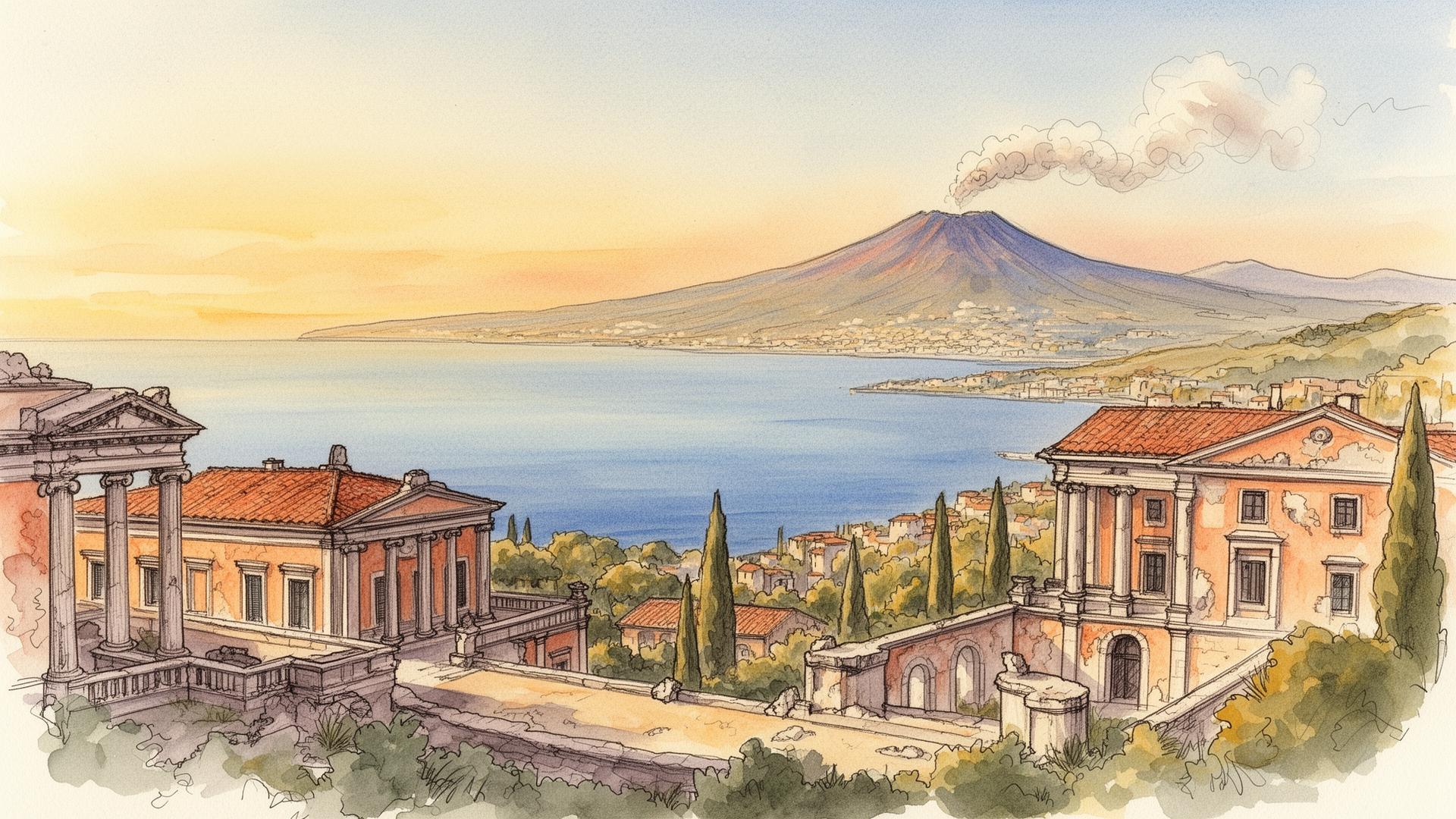
Archaeological excavations in Castellammare di Stabia
Stabiae Archaeological Excavations – Castellammare di Stabia
A network of Roman residences overlooking the Bay of Naples, in the Castellammare di Stabia area, among the most significant surviving examples from the imperial period.
Explore the siteNavigation
Explore the Villas of Stabia
Villa San Marco
One of the largest Roman villas in the Vesuvian area.
Villa Arianna
Renowned for its frescoes and the quality of its decoration.
The Villas of Stabia
The residential network of ancient Stabiae.
Stabiae
The history and development of the Roman territory.
Archaeological heritage
What are the Villas of Stabia
The Villas of Stabia form a unique network in Roman archaeology. Situated in Castellammare di Stabia, on the Varano plateau, these residences were intended for the Roman elite and designed as holiday retreats.
Unlike Pompei, which was a commercial city, Stabiae was a place devoted to private life, the landscape and leisure.
The area
Stabia in the Vesuvian area
The Villas of Stabia form part of the Vesuvian area alongside Ercolano and Pompei, but have distinct characteristics.
Their panoramic position overlooking the Bay of Naples makes this site unique, both archaeologically and in terms of its landscape.

Find out more
Further reading
Plan your visit
Why visit the Villas of Stabia
Visiting the Villas of Stabia means discovering a lesser-known yet essential aspect of the Roman world, in a more intimate setting than the busier sites.
The Roman residences
The Villas
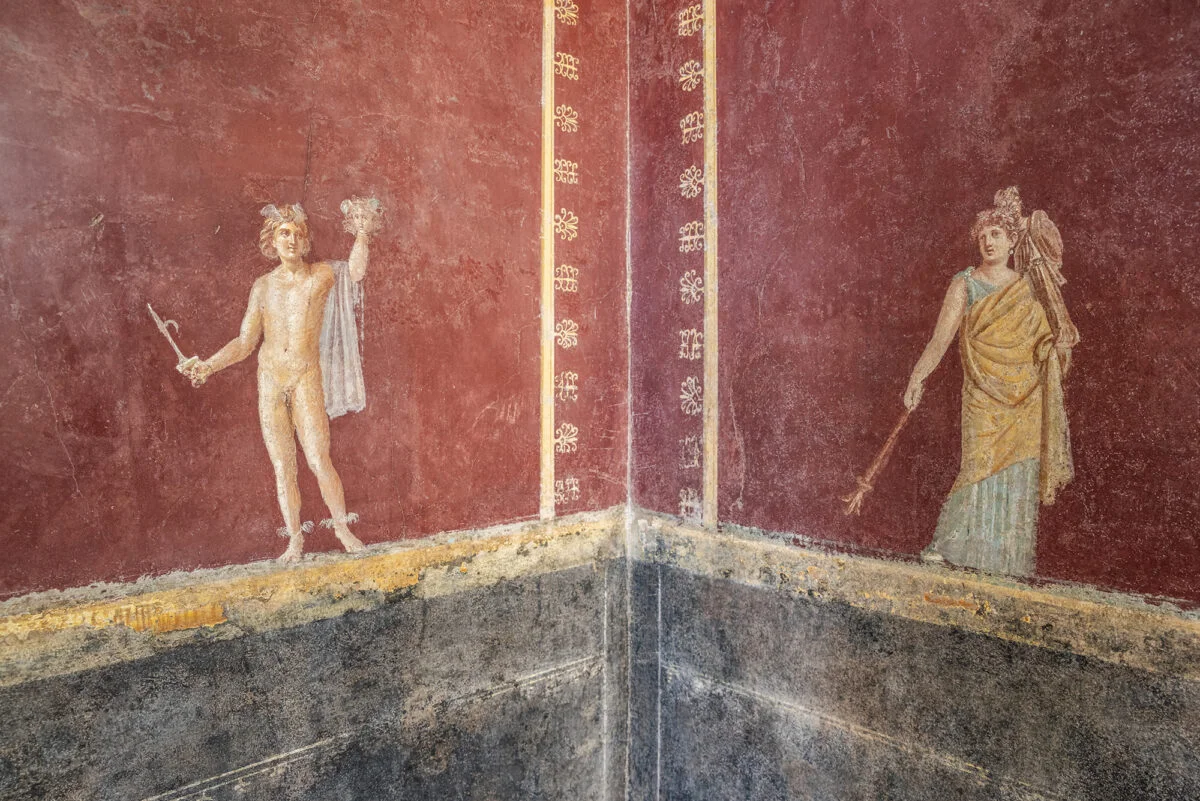
Villa San Marco
Covering approximately 11,000 sq m, it extends in a splendid panoramic position on the edge of the Varano plateau. Named after a chapel that existed in the area in the 18th century, it includes two large peristyles at different levels, around which a large pool, reception halls and residential quarters are arranged.
The oldest nucleus, dating to the Augustan era, consists of the tetrastyle atrium with surrounding rooms, from which one reaches the large kitchen. Recently a secondary entrance towards the coastal area was identified, connected to a rustic quarter with latrines and service rooms.
Discover Villa San MarcoVilla Arianna
Named after the fresco depicting Arianna abandoned by Teseo on Nasso, found on the back wall of the triclinium, it was excavated during the Bourbon era between 1757 and 1762 under the direction of the Swiss engineer Karl Weber, and subsequently reburied.
The decorative schemes testify to the refined taste of the patrons: in small rooms, miniaturistic decoration prevails with cupids, flying figures and landscapes; in the large halls, mythological themes with nearly life-size figures inspired by Dioniso. The floors feature a vast repertoire of black-and-white mosaics.
Discover Villa Arianna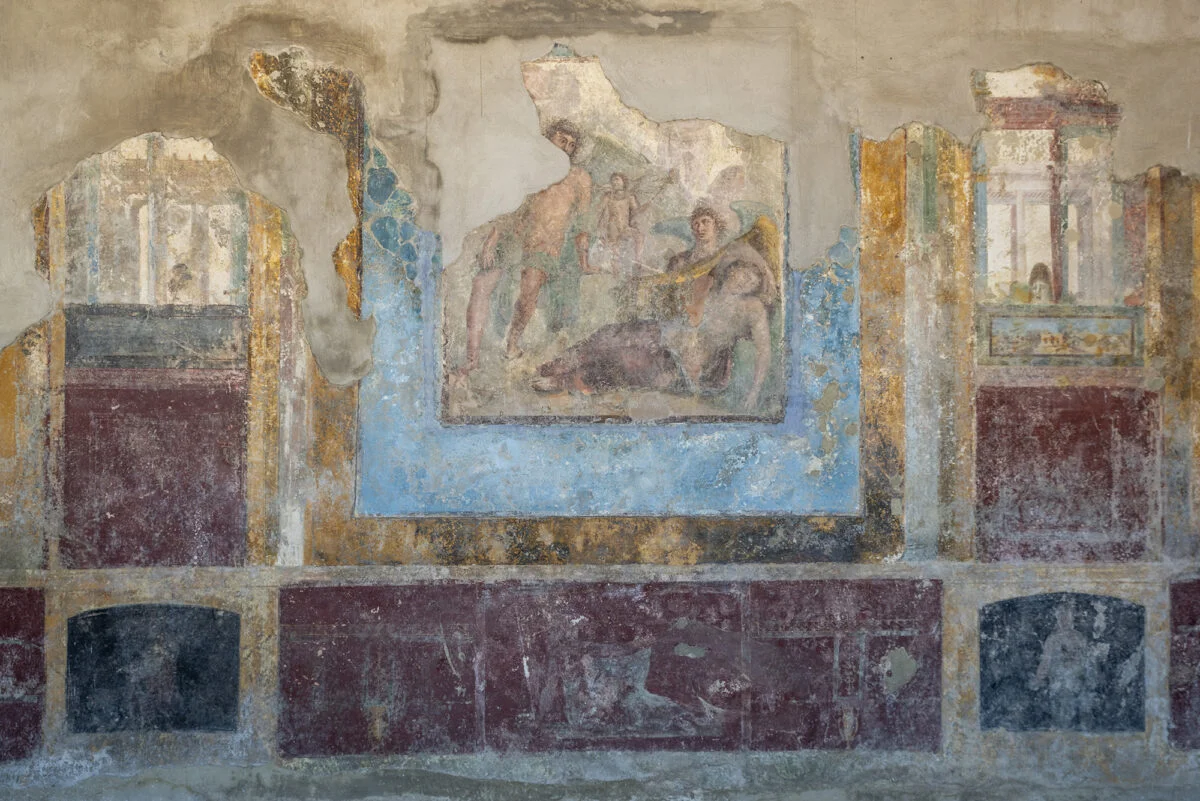
Location
Reach the Excavations
Villa San Marco
Via Passeggiata Archeologica, Località Varano
80053 Castellammare di Stabia (NA)
Villa Arianna
Str. Varano, 1, 80053 Castellammare di Stabia (NA)
Opening hours
Villa Arianna and Villa San Marco – closed on Tuesdays
- March 16 – October 14: 9:00 AM–7:00 PM (last entry 6:00 PM)
- October 15 – March 15: 9:00 AM–5:00 PM (last entry 4:00 PM)
- Closed on December 25 and January 1
Free admission.
Source: Parco Archeologico di Pompei – always check pompeiisites.org before your visit. pompeiisites.org/orari-e-tariffe
Transport
By car
A3 Motorway Naples-Salerno, exit Castellammare di Stabia
Castellammare di Stabia taxis
081 8710577DISCOVER MORE
More wonders of Stabia
From Roman villas to eighteenth-century Nativity figures: the places that tell the story of Castellammare.

Stabia Travel Guide
Your guide to the city: what to see, a map, itineraries and useful addresses to help you experience Castellammare.
Visit the website →
Museo Archeologico Libero D'Orsi
In the Reggia di Quisisana, discover the frescoes and treasures unearthed in the villas of ancient Stabiae.
Visit the website →
Presepe Stabile Stabiano
The historic Nativity figures of the Co-Cathedral, on display all year round with free admission.
Visit the website →